

- FDA approved in 1946, before rigorous medication testing standards
- Other countries have taken action to limit diphenhydramine’s availability by making it available by prescription only: Germany, Netherlands, Sweden.
- Crosses the blood-brain barrier to block histamine in the CNS.
- Histamine is a neurotransmitter.
- Acts to block neurotransmitter effect of histamine within the CNS leading to sedation, drowsiness, and psychomotor impairment, urine retention,
- Increases risk of dementia and global cognitive impairment
- Half-life in elderly can be up to 18 hours.
- Due to long half life it can lead to daytime sedation, poor concentration, reduced memory, reduced sensory-motor performance.
- May impair driving performance as much or more than alcohol
- CSACI position statement: Newer generation H1-antihistamines are safer than first-generation H1-antihistamines and should be the first-line antihistamines for the treatment of allergic rhinitis and urticaria – PubMed
- Insomnia
- Fall asleep faster but sleep quality if not good.
- Decreases REM sleep
- Reduces deep sleep (slow wave sleep)
- tolerance can develop
- increased risk for falls, urine retention, constipation, cognitive impairment,
- Urticaria / hives
- Second generation antihistamines (cetirizine, loratidine) are recommended first line agents for urticaria. They are equally effective with fewer side effects.
- Cetirizine is approved for treatment of chronic idiopathic urticaria
- Noted to enhance the sedative and hypnotic effects of benzodiazepines.
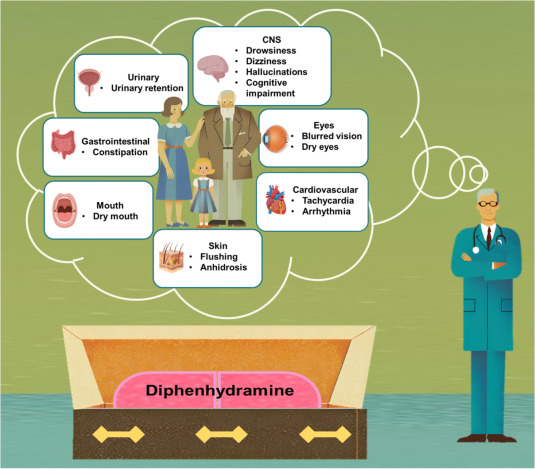
Is It Really Time to Say Goodbye to Benadryl? | MedPage Today
Diphenhydramine: It is time to say a final goodbye – World Allergy Organization Journal
We believe that diphenhydramine has reached the end of its life cycle, and in its class of therapies is a relatively greater public health hazard. We recommend it should no longer be widely prescribed or continue to be readily available over the counter.
Diphenhydramine: It is time to say a final goodbye – World Allergy Organization Journal