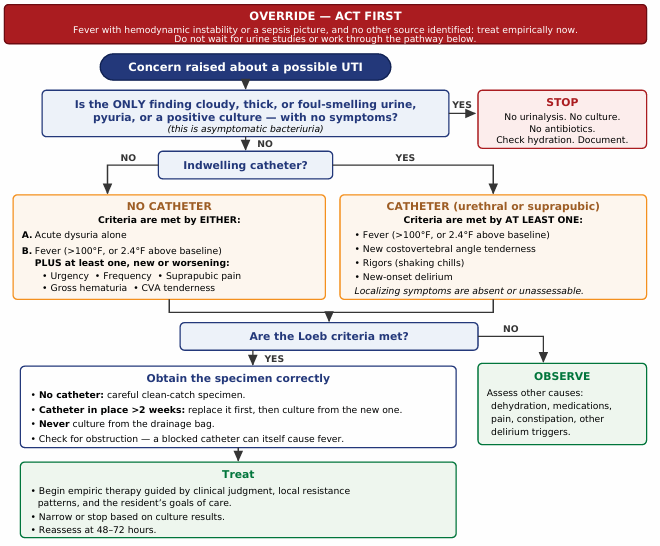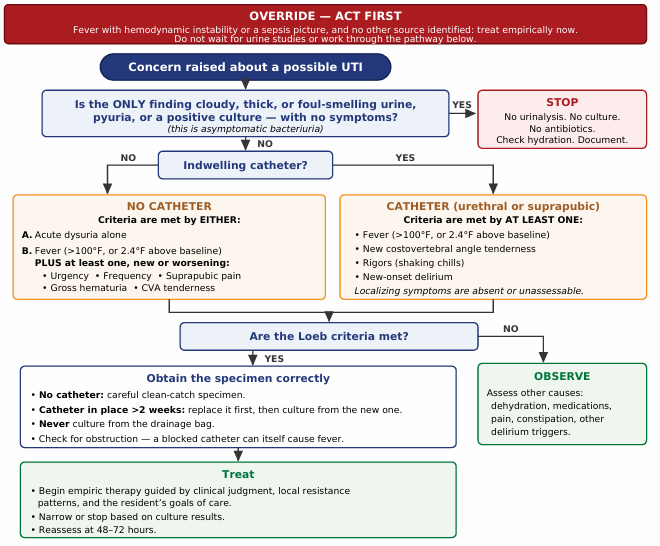
Suspected urinary tract infection is the most common trigger for antibiotic use in long-term care, yet the majority of these episodes do not represent a true, treatable infection. This report consolidates the IDSA asymptomatic bacteriuria guideline, the Loeb minimum criteria, and the supporting outcome literature into a single reference for physicians, nurse practitioners, physician assistants, nursing staff, and hospice staff. The goal is to align all provider practices with the facility’s antibiotic stewardship program.
Cloudy, thick, or foul-smelling urine is not a reason to test or treat. Urine appearance and odor reflect hydration and are excluded as criteria by both IDSA and Loeb.
Pyuria does not indicate infection in this population. Roughly 90% of long-term care residents with asymptomatic bacteriuria also have pyuria, so a “positive” urinalysis rarely changes the diagnosis.
New confusion or a fall, without fever or hemodynamic instability, should prompt a broad evaluation — not a urine culture. Delirium in these residents is far more often caused by medications, retention, dehydration, or pain than by a UTI.
Catheterized residents follow a distinct pathway: a higher bar to begin looking (systemic signs only), but a lower bar to treat once those signs appear, given the catheter’s direct route to the bloodstream.
Reducing antibiotic use through these criteria is supported by evidence. Four randomized trials found no increase in hospitalization, sepsis, or death, while the harms of overtreatment — Clostridioides difficile, resistance, and adverse drug events are well documented.
Antibiotic decisions by hospice and other consulting services fall within our stewardship program’s scope and are surveyable under F881, making shared criteria a compliance issue as well as a clinical one.